Consuming dirt has never tasted so good.
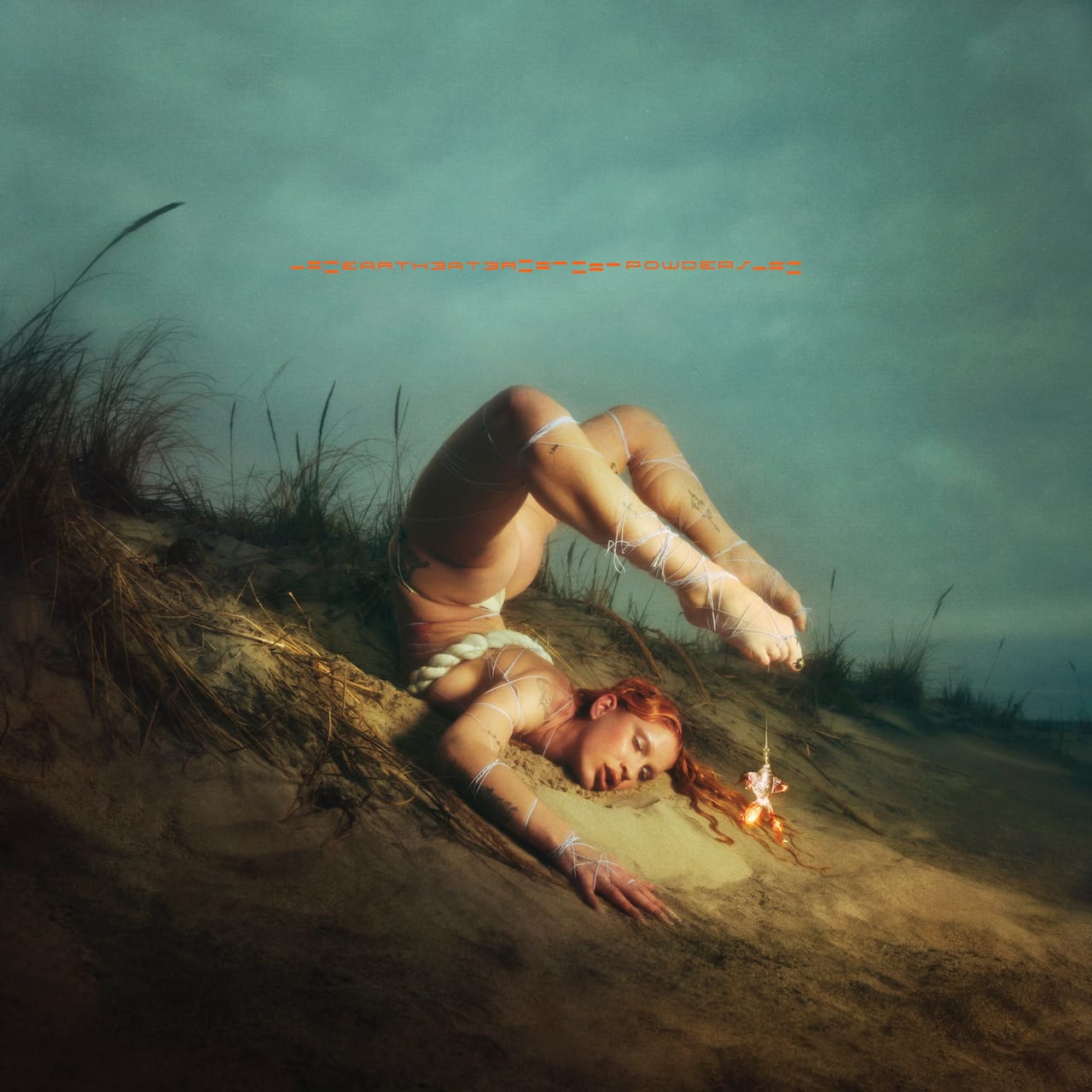
This album came to me unceremoniously, autoplaying after a totally unrelated playlist finished, handed over to me by the whims of a system of little electronic switches owned by a morally-bankrupt streaming platform I never get around to jumping ship from. That, I’d have to guess, probably is amongst the most predominant ways most of us do ever find new music nowadays, and is it a point of shame? Admitting in some small part that these algorithms work on us, admitting that the relationship we have to the art we love may not be as complicated as it feels to us, and that we are deeply, deeply predictable. And yet, it’s easy to reinterpret the unfathomable scope of these user-retention engines as an unknowable aether, an aether from which suddenly, a wash of unassuming, padding strings wove the ground for Alexandra Drewchin’s vocals to saturate out, dense, restrained, and splintering.
This was Sugarcane Switch, the experimental musical being known as Eartheater’s opener to her latest album, Powders. These opening lines feel crushed in, the track itself physically cages in the vocals, the cage’s bars strain outwards in equal nervous tension. A first hint of where we are moving to is in the beating kick, pulsing unnaturally, until the track pulls a further magic trick in how seamlessly the strings are cross-faded into a beating, jagged synth taking up their tune. Wailing whistle tones land gracefully into whirling choruses, as the pulsing, spinning sub-bass pulls us through to the other side.
Each track preceding feels cold and distant in a perfectly intriguing manner. In Face in the Moon and Clean Break, enough familiar pop song-structures exist for the mind to latch onto in recognition; a simple repeating chorus line, or a two chord acoustic guitar loop. This almost always results in a new disorientating rug-pull: Every time a sense of space feels established, the reverb is warped by a new funhouse mirror; Every stable melody draws into a new pit of uncanny. The basslines, when evident in these tracks, remain decidedly simple, tying the production hurricane down to at least one grounding anchor. At least on Clean Break, this may have been a little too safe, and it’s not difficult to imagine that even some timid rhythmic variations could have added just a little more to the final execution of an excellent piece.
One of the most bizarre and ear-pricking moments on the album is a cover of System of a Down’s Chop Suey, an exceptionally sombre reimagining of the formerly neck-break track under whirling delays and acoustic guitar. For how restrained this track keeps for the majority of its runtime, it’s easy to anticipate a big flourishing ending, which is in fact what the track gives us. And, uhh, it’s a bit much. Little too showy. Honestly, a commitment to keeping the track restrained to the end may have been what it needed, but hardly a ruiner.
Near the backend, the album becomes decidedly far more trip-hop, the winding atmospheres of before pulled forwards by a far more percussive backing in Mona Lisa Moan, and Pure Smile Snake Venom. Similar in this vein is Heels Over Head, a very fleeting zenith of toe-tappiness, and yet still maintained is the continued sense that the whole album, experience, exists as the expression of a sort of silent space-blizzard dimension where everyone is midway through a breakup conversation in slow motion. I think I’ve already mentioned once or twice that this is how this album has felt like, right?
Powders is one exceptional tonal effort, where its short-comings don’t often seem to bring it down as such, but more just leave a yearning feeling that as good as it is, it could still, somehow, do more and be more. I’m told by my close associate google that this album is to be twinned with a further release next year, Aftermath. I think I will look forward to that.
This ones getting an 8 out of 10 today. A high one, I’d suppose. Going to go into my garden and eat some earth now, see what its all about.